 English
 Italiano
 Deutsch
 Français
In the heart of the Valtiberina, among villages and the Renaissance.
Some places are not just visited: they are lived, slowly. The Valtiberina is one of them. It is the valley where the River Tiber takes its first steps, among gentle hills, cultivated fields, and villages that seem to guard the secret of a slower time. Here Tuscany meets Umbria, and the border becomes encounter, exchange, and story.
The landscape is harmonious and luminous, dotted with olive groves and rows of vines that trace the passing seasons. Yet it is the towns that give the valley its soul.
In Sansepolcro, art feels at home. The birthplace of Piero della Francesca, it preserves in the Civic Museum masterpieces that shaped the Renaissance. Walking along its Medici walls means crossing centuries of history, among elegant palaces and silent churches.
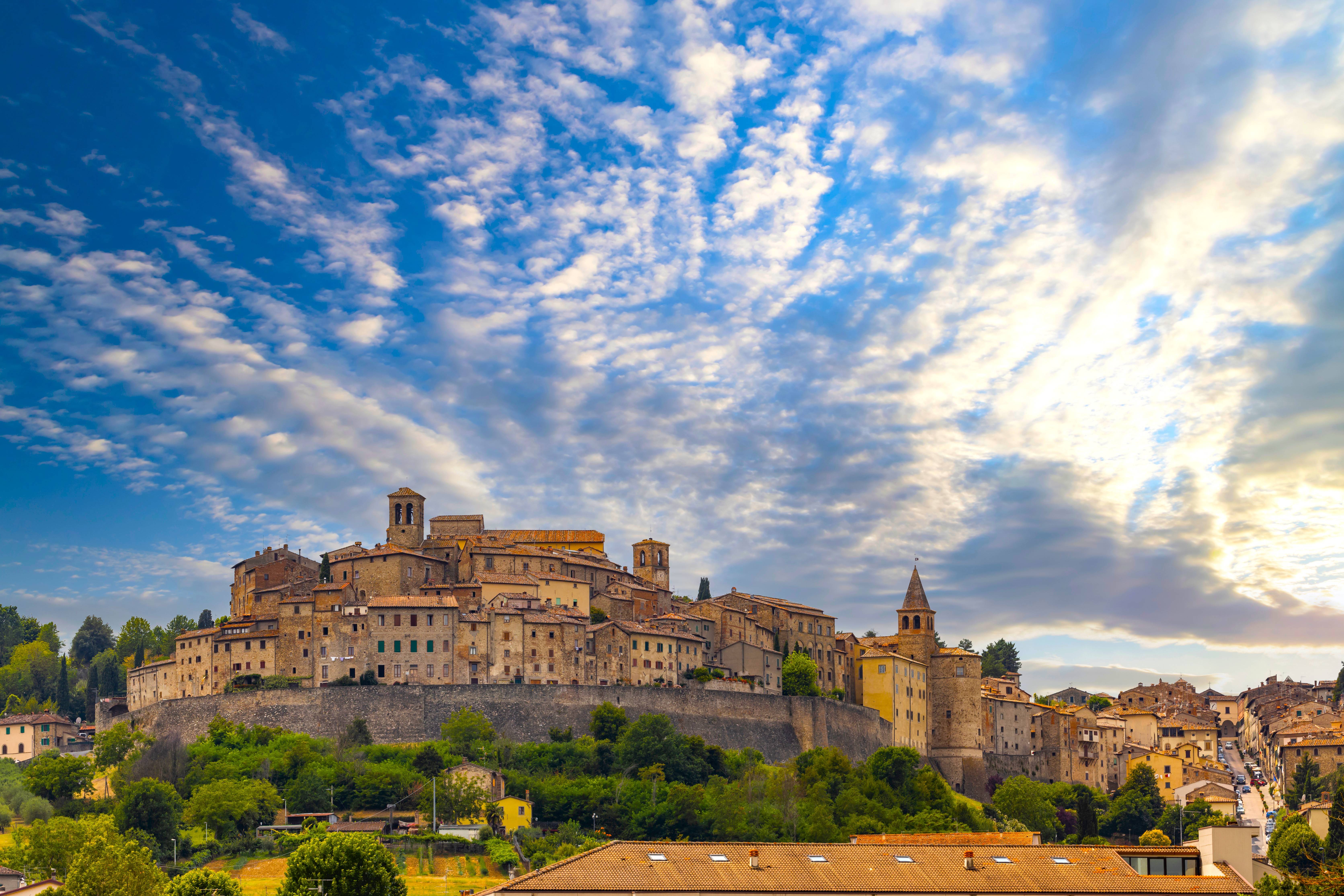
Not far away, Anghiari climbs a rocky spur overlooking the valley from above. Its steep alleys, sudden little squares, and views opening onto the countryside tell of a proud and hard-fought past, linked to the famous Battle of Anghiari, a key event in Renaissance Italy.
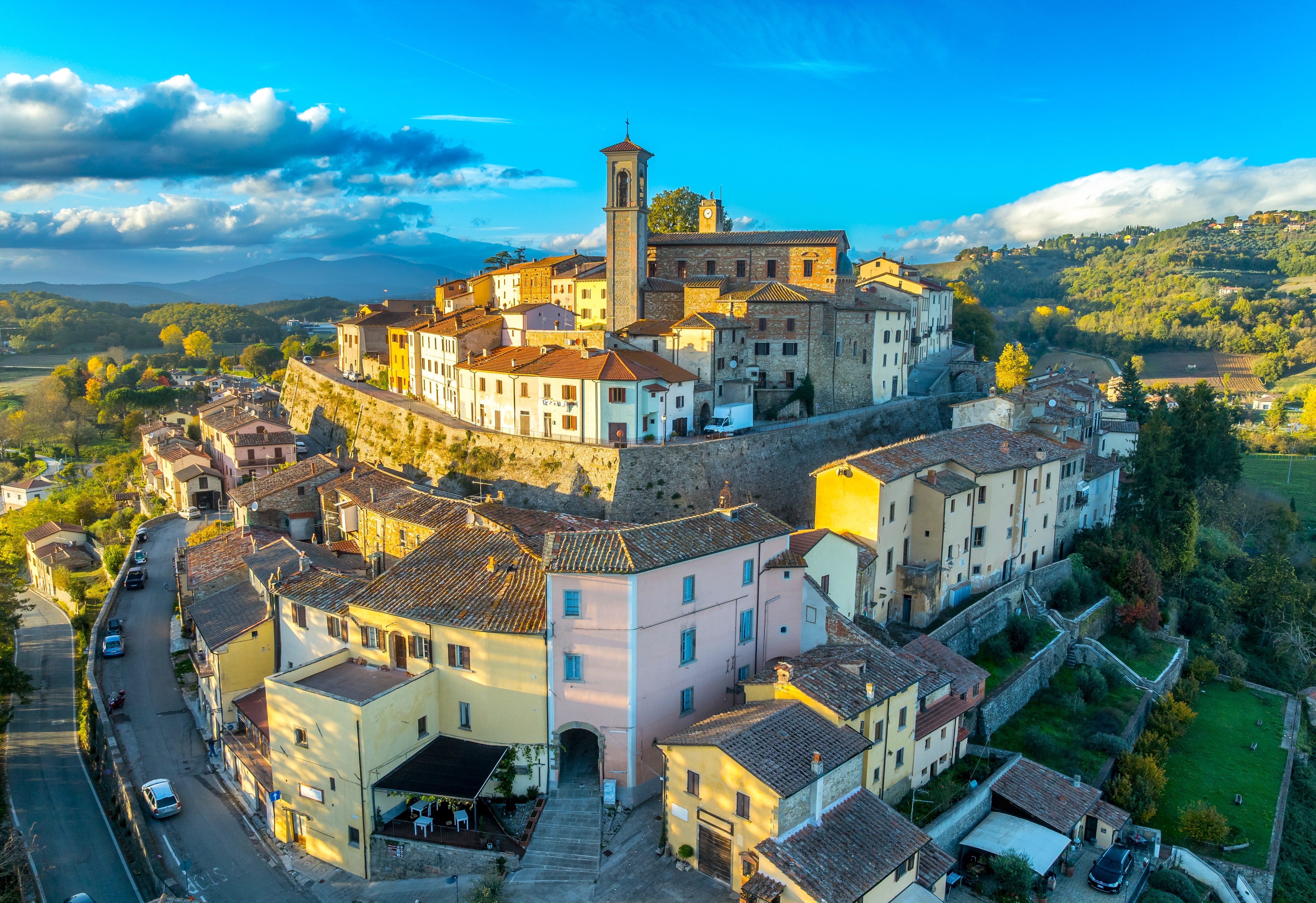
Then there is Monterchi, small and intimate, home to a unique masterpiece: the “Madonna del Parto,” also by Piero della Francesca, now kept in its dedicated museum. An intense, intimate image that alone is worth the journey.
And finally Pieve Santo Stefano, known as the “City of the Diary”: here memory takes shape through the stories of ordinary people, preserved in an archive that makes everyday life extraordinary.
The Valtiberina is a land that saw the passage of Etruscans and Romans and, in the Middle Ages, was contested by Florence, Perugia, and the Papal State for its strategic position. It is a border valley, yes—but above all a valley of connections. Here the Renaissance is not just a chapter in books: it is a living presence, reflected in the clear light, the harmonious proportions of its towns, and the balance between people and landscape.
Visiting the Valtiberina means allowing yourself time. Time to walk along the river, to sit in a sunlit square, to listen to the silence as it speaks. Because in this valley, the past is never truly past: it continues to live quietly within every stone and every horizon.